1. Welcome back to Pakistan Art Forum Sumia. Congratulations on your second sold
out solo show! How does it feel to have two consecutive sold out shows?
It feels very meaningful to have had two consecutive sold out solo shows with Pakistan Art Forum. For me, it’s not only about the number of works sold, but about knowing the work has found a connection with people. My paintings explore gesture, movement, tension, and a sense of uncertainty within the figure and seeing people respond to that, each in their own way, makes the experience especially meaningful. It’s also encouraging, and pushes me to keep taking the practice further as it continues to evolve.
2. Please tell us what you explore in your latest body of work ‘Shifting States’?
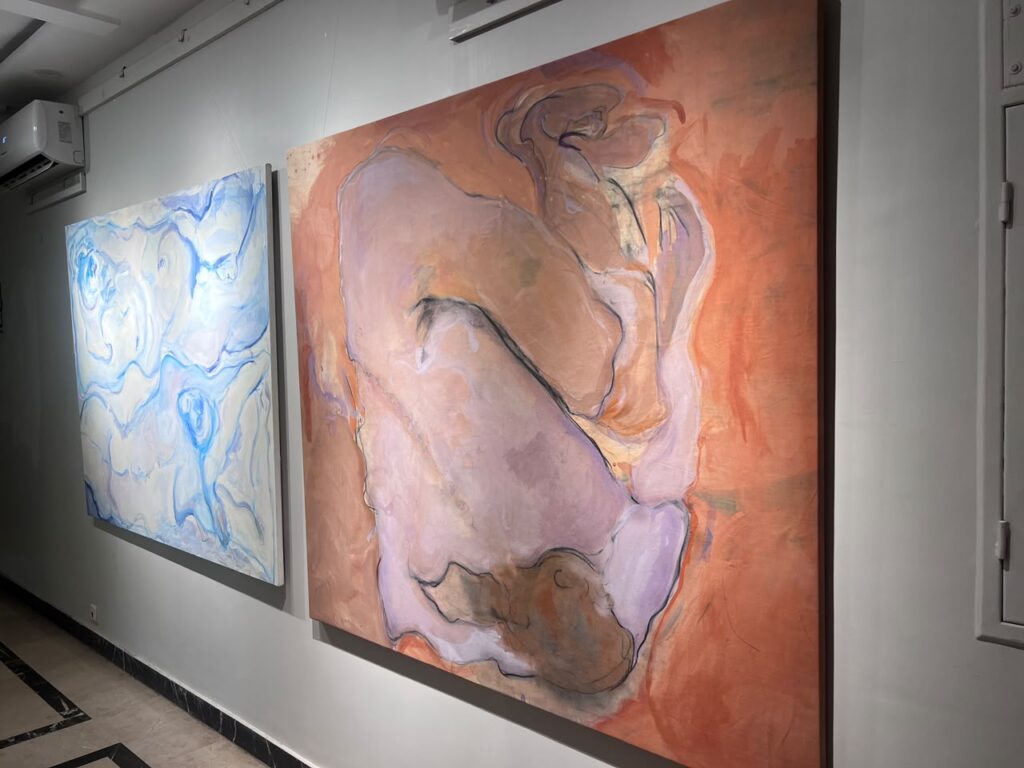
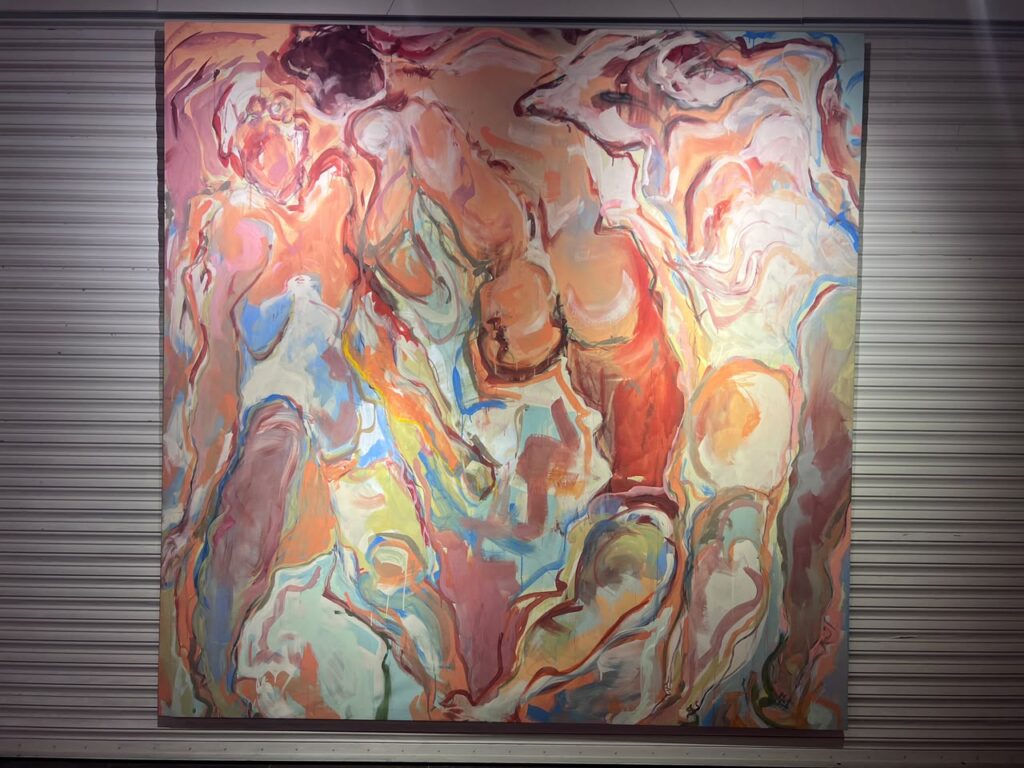
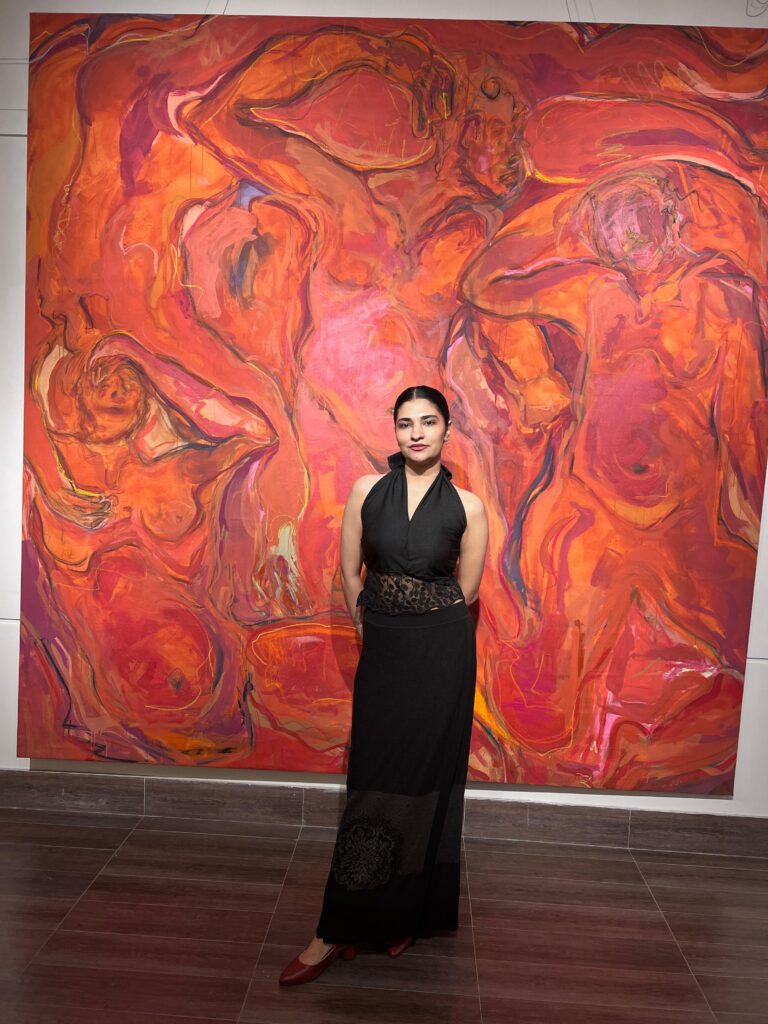
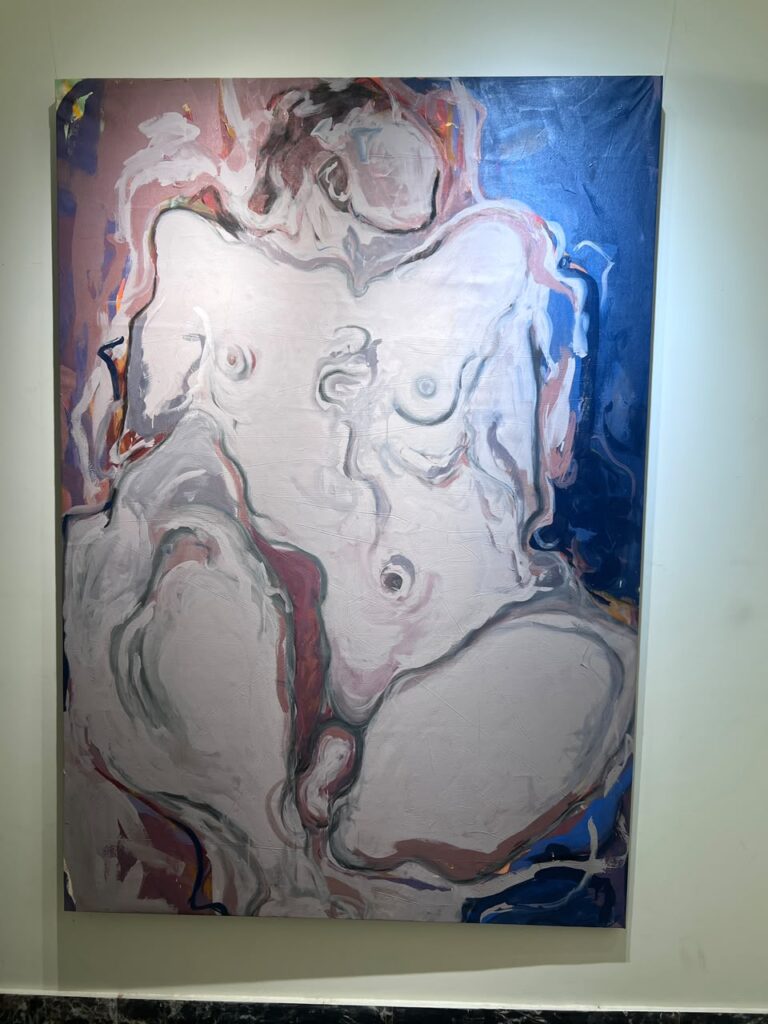
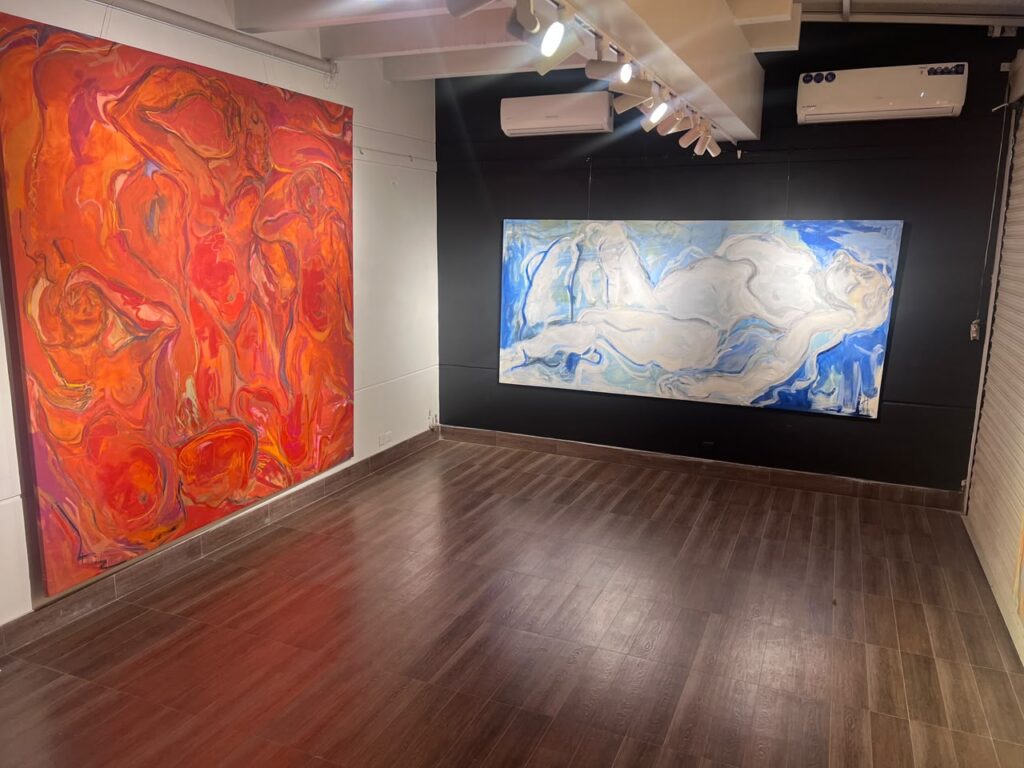
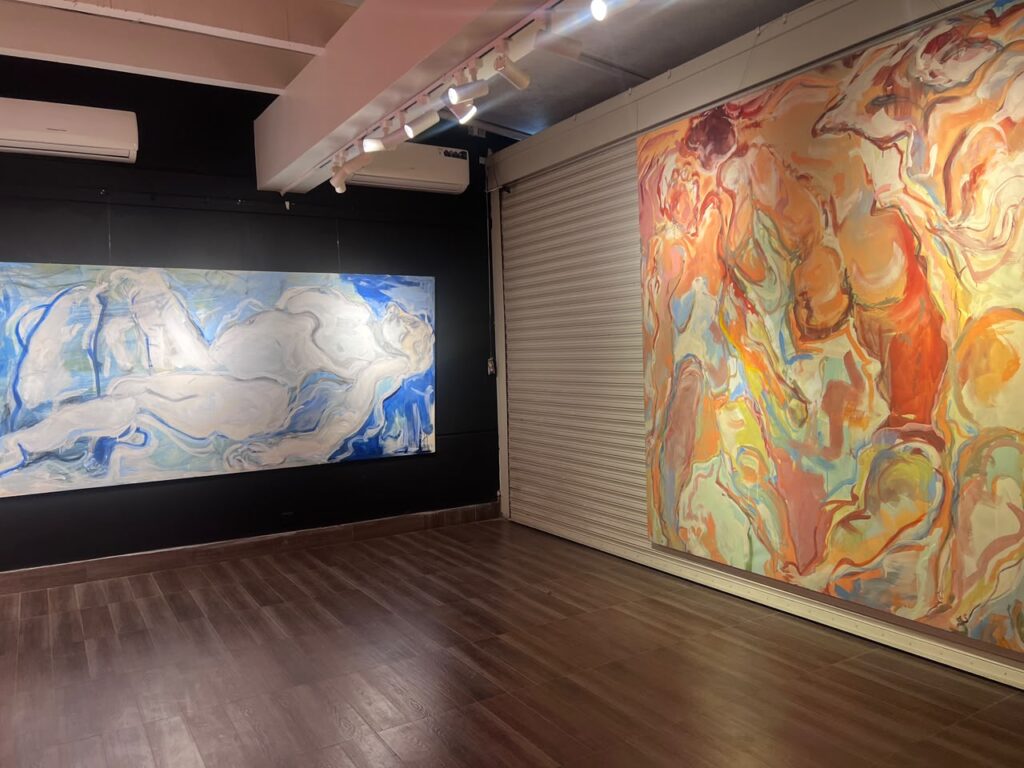
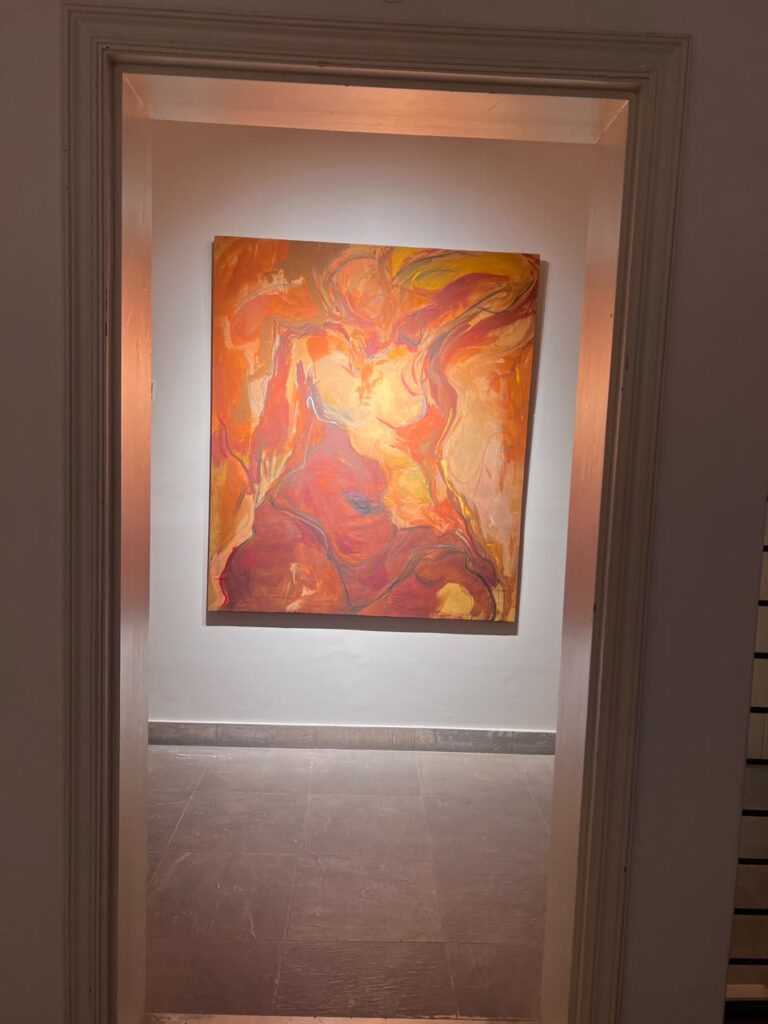
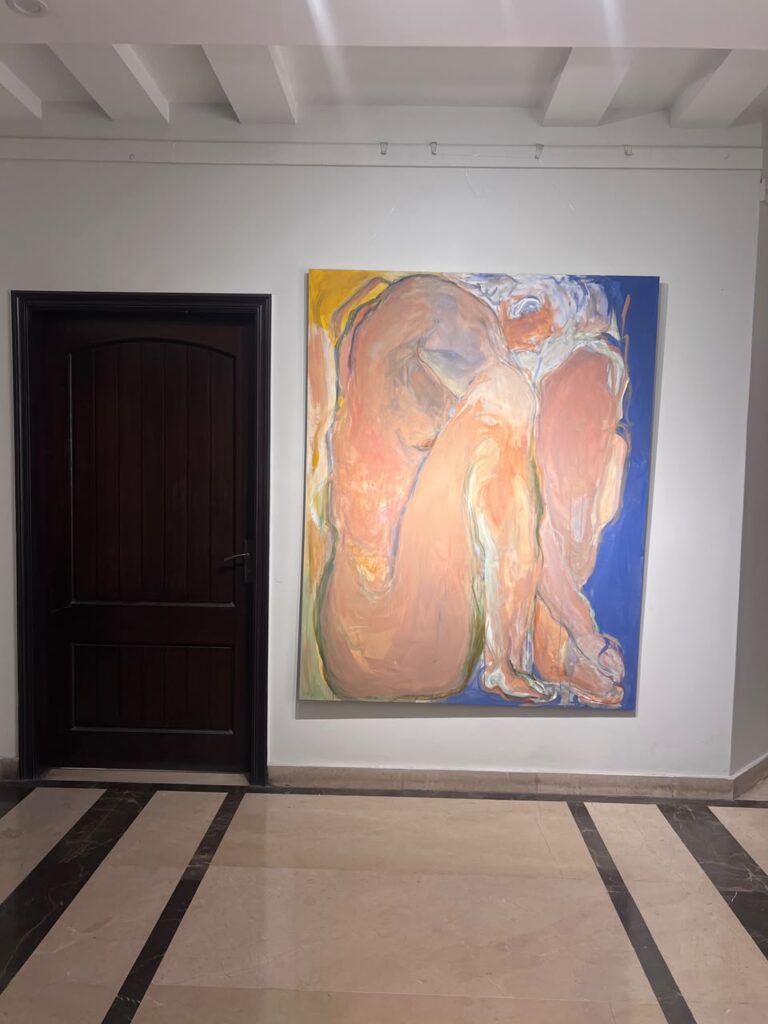
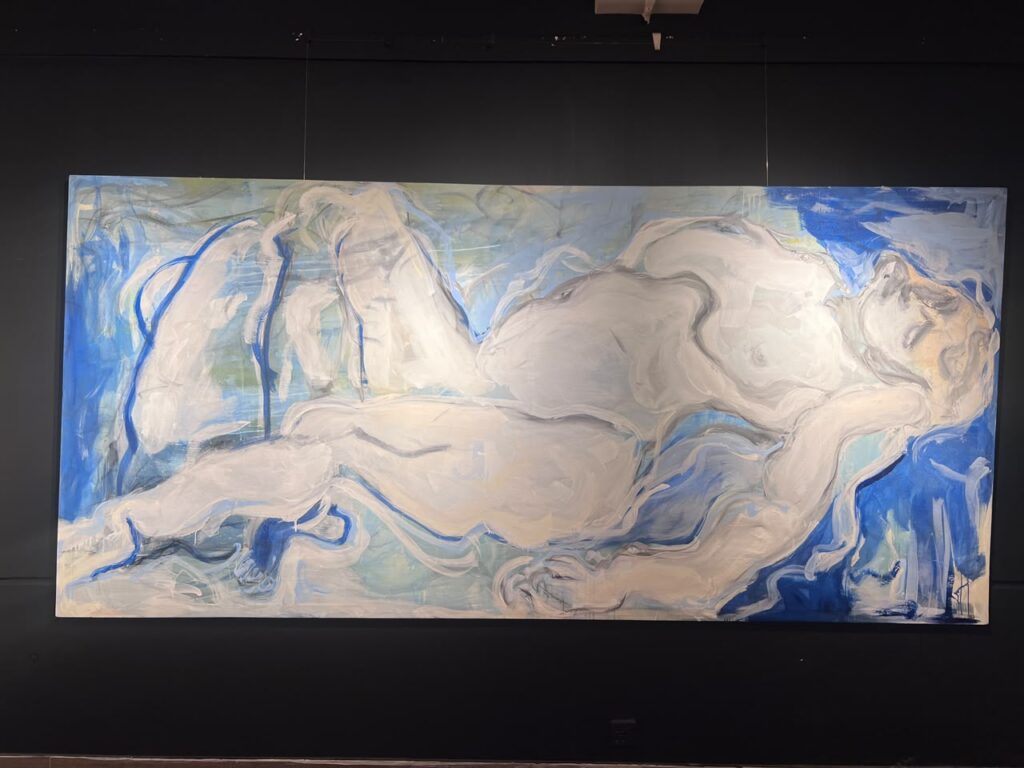
In this body of work, I’m less interested in the figure as a finished subject and more interested in catching it mid-change somewhere between one condition and another, before it settles into anything definite. A single figure might hold tension and calm, beauty and heaviness, all within the same canvas, without fully committing to any of them. The distortion in the paint isn’t there to make the body look “broken” or strange, it’s how I let the figure stay honest about the fact that it’s still moving, still becoming something else. I think of the body the way I think of a person, never one static thing for very long, and “Shifting States” is really my attempt to hold that truth on canvas without trying to resolve it into a single, clean answer.
3. How do you visualize color palettes for each work? Does it depend on your mood or something else?
I don’t approach color as something that simply reflects my mood. It develops in relation to the figure and the overall structure of the painting. I often begin with a certain color relationship in mind, but as the painting develops, the colors respond to one another and can shift. I’m interested in how color can create weight, tension, depth, or movement within the figure, rather than simply describing it.
4. The scale of your work is remarkable. Tell us some of the challenges in producing such large large canvases.
Working on a large scale has become a very natural part of how I work, although it is definitely challenging. I usually work on several paintings at the same time, moving between them as they develop. Sometimes I’m on a ladder working into one part of a painting, and at the same time I might find myself sitting or working on the floor with another. I’m constantly moving back and forth, stepping away from the canvas, coming close again, and trying to understand what the painting needs.
The physical demand can be quite intense, especially when I’m working for long hours, but I actually enjoy that physical involvement with the work. I’m not someone who naturally wants to make paintings that sit quietly in a small corner. I want the figures to have a sense of presence and to feel alive within the space. For me, the scale becomes part of that experience. It gives the body of work a certain physicality and allows me to work with gesture, movement, and tension in a much more immediate way.
5. Which international and local artists’ work inspires you?
I wouldn’t say I’m directly inspired by any single artist. But there are painters whose work I keep returning to and studying closely not to borrow from their style, but because of the questions their work raises about the figure and about painting itself. Internationally, Paul Gauguin and Francis Bacon have held my attention for a long time not because of how their paintings look on the surface, but because of how differently each of them approached the figure and what painting could actually do.
What draws me to Bacon is the way he could push the figure into distortion, into something unsettled or fragmented, without ever letting it lose its physical weight or presence. That balance between breaking the figure apart and keeping it fully present is something I find myself returning to again and again. Gauguin interests me for a different reason the way he used color as something beyond description, letting it carry meaning and feeling rather than just representing what something looked like. When I look at artists like these, what stays with me isn’t their visual language, but the thinking behind their choices the questions their work raises about painting itself.
6. You are getting a masters degree from Tor Vergats, Rome, Italy. Tell us about what you are studying, why did you choose that subject and how is Rome inspiring your work?
I’m currently pursuing my master’s in Letters and Philosophy at the University of Rome Tor Vergata, with my studies closely connected to art history and the historical and philosophical ideas surrounding art. I chose this field because I wanted to move beyond simply making paintings and spend more time understanding the history, ideas, and cultural contexts that shape how we look at art. Studying art history also allows me to look more closely at how the human figure has been represented across different periods and why those representations change.
Philosophy adds another dimension to this. It makes me think about the figure not only as a physical body, but in relation to ideas of identity, existence, vulnerability, and human experience. These questions do not necessarily become subjects in my paintings, but they influence the way I think about the figure and the questions I bring into the studio.
Being in Rome adds another layer to this experience. Living in a city surrounded by centuries of art and history has made me more attentive to how images have been made, understood, and reinterpreted over time. It doesn’t directly determine what I paint, but it has expanded the way I look at art and has made my relationship with my own practice more critical.
7. What is next for Sumia Jaffri?
I don’t usually plan my practice too far ahead because I like change, and I don’t want to decide in advance where the work should take me. I prefer to keep working and allow the paintings to lead me towards what comes next. For now, my focus is on my studies alongside my painting practice. I want to use this time to deepen both through looking, reading, researching, and working in the studio.
What matters to me is not repeating what I have already done, but questioning it and understanding where its limitations are. I want to take risks and allow the work to develop in new ways without losing the physical energy and immediacy that are at the centre of my practice. I’m interested in what happens when I challenge my own way of working rather than trying to arrive at a fixed style. For me, what comes next is about staying open, continuing to question the work, and seeing where it takes me.